
 EN
EN


How Can a Knee Joint Replacement Reduce Pain and Improve Function?
For countless individuals, chronic pain within the knee joint transforms simple daily activities into daunting challenges. When conservative treatments like medication, physical therapy, or injections no longer provide sufficient relief, the prospect of a knee joint replacement often emerges as a potential pathway back to an active, fulfilling life. This procedure represents a significant medical advancement designed to address severe damage within the knee joint itself. But how exactly does intervening in the knee joint lead to such profound relief and restored mobility? The answer lies in a fundamental mechanical restoration of one of the body's most complex and weight-bearing structures.
Understanding the Source of Knee Joint Pain
To appreciate how a knee joint replacement works, one must first understand what goes wrong within a diseased knee joint. The healthy knee joint is a marvel of biological engineering, featuring smooth cartilage that cushions the ends of the bones, allowing for effortless, pain-free movement.
The Breakdown of Natural Cushioning
The primary culprit behind severe knee joint pain is often the complete or near-complete wear-and-tear of this protective articular cartilage. Conditions like osteoarthritis lead to a situation where the cartilage, which normally provides a frictionless surface, erodes away. What happens when this cushion is gone? The underlying bones within the knee joint—the femur, tibia, and patella—begin to rub directly against each other during movement. This bone-on-bone contact is a direct source of significant pain, inflammation, stiffness, and can often lead to the development of bony spurs, further disrupting the knee joint's function.
The Consequences of a Compromised Joint
A damaged knee joint does not exist in isolation; its poor health radiates outward, affecting the entire musculoskeletal system. How does the body respond to a painful knee joint? It often adopts abnormal walking patterns, or limps, to offload pressure. This compensation places undue stress on other areas, such as the hips, back, and the opposite knee joint, potentially leading to secondary pain and joint issues. Furthermore, chronic pain from the knee joint frequently leads to muscle weakness, particularly in the quadriceps and hamstrings, creating a cycle where instability leads to more pain and further disuse.
The Mechanism of Pain Relief and Functional Restoration
A knee joint replacement, specifically a total knee arthroplasty, is fundamentally a resurfacing procedure. It addresses the painful bone-on-bone contact by replacing the damaged surfaces with smooth, artificial components, thereby restoring the knee joint's mechanical integrity.
Eliminating the Source of Friction
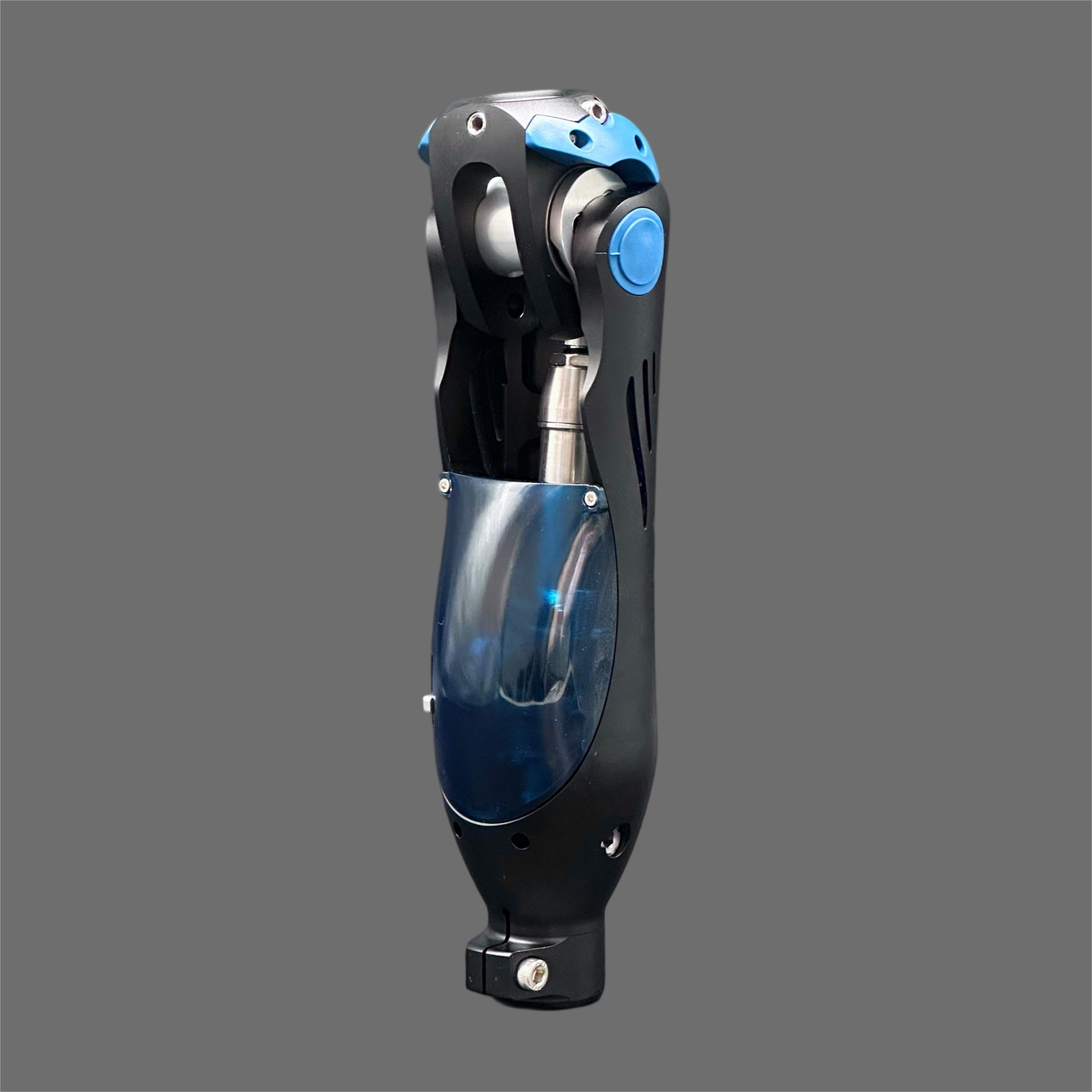
The core principle of the surgery is the removal of the damaged ends of the bones within the knee joint. The arthritic ends of the femur and tibia are precisely trimmed, and the worn underside of the patella may also be addressed. In their place, artificial components made from highly durable metal alloys and medical-grade plastics are securely attached. These implants recreate the smooth gliding surfaces that were lost. Is there still bone-on-bone contact after this procedure? Crucially, no. The new artificial surfaces glide smoothly against each other, which immediately eliminates the primary mechanical source of pain originating from within the knee joint.
Restoring Alignment and Stability
A diseased knee joint often becomes misaligned, leading to bow-legged or knock-kneed deformities. How does a knee joint replacement correct this? The procedure is not just about adding new parts; it involves meticulous surgical technique to restore the natural, anatomical alignment of the leg. By correcting this alignment, weight is distributed evenly across the new artificial knee joint. This proper alignment is essential for stability. A stable knee joint allows the surrounding muscles to work more efficiently and with greater confidence, directly translating to improved function and a reduced risk of giving way or feeling unstable during activities.
The Journey to Improved Function
While the surgery itself removes pain and corrects alignment, achieving improved function is an active process that begins immediately after the operation. The new knee joint provides the hardware, but the software—the muscles, tendons, and neural pathways—requires retraining.
The Critical Role of Post-Operative Rehabilitation
The success of a knee joint replacement is deeply intertwined with a dedicated rehabilitation program. Why is rehabilitation so non-negotiable? The period following surgery is focused on combating swelling, gradually restoring range of motion, and, most importantly, rebuilding muscle strength. Physical therapists guide patients through exercises specifically designed to strengthen the quadriceps and other muscles that support the new knee joint. Consistent rehabilitation is what transforms a mechanically sound joint into a functionally capable one, enabling activities that were previously too painful.
Regaining Range of Motion and Strength
A key functional goal is restoring a functional range of motion, particularly the ability to fully straighten and sufficiently bend the knee joint. Therapists employ various techniques to gently encourage this mobility. Simultaneously, a progressive strengthening program is implemented. As the muscles surrounding the knee joint become stronger, they act as a natural, dynamic brace, absorbing shock and providing stability. This muscular support is vital for long-term function and health of the artificial knee joint, allowing for sustained improvements in walking, stair-climbing, and other daily tasks.
Long-Term Outcomes and Lifestyle Integration
The benefits of a successful knee joint replacement extend far beyond the initial recovery period, offering a long-term solution for managing debilitating pain and disability.
Sustained Pain Relief and Activity Resumption
For the vast majority of patients, the profound pain relief achieved after recovery is durable. What does this mean for daily life? It typically enables a return to low-impact activities that enhance quality of life, such as walking for exercise, swimming, cycling, gardening, and traveling without the constant burden of knee joint pain. The procedure is designed to relieve pain and restore function, allowing individuals to re-engage with the hobbies and social activities they may have abandoned.
Managing Expectations for the Artificial Joint
It is important to understand the nature of the new knee joint. While it is engineered for durability and smooth function, it is a mechanical device with different properties than the original biological tissue. Patients often report feeling a sense of "awareness" in the joint or hearing occasional clicking sounds, which are usually normal. High-impact activities like running or jumping are generally discouraged to protect the longevity of the implant. The focus is on achieving a stable, pain-free knee joint that supports a healthy, active lifestyle within reasonable parameters, safeguarding the investment in the new joint for years to come.
Frequently Asked Questions
What is the typical recovery timeline after a knee joint replacement?
Recovery is a progressive journey. Most patients spend a few days in the hospital before transitioning to home. Walking with an aid begins immediately. Significant improvement is seen in the first 6-12 weeks, with continued strengthening and functional gains for up to a year or more. Commitment to prescribed exercises is the single greatest factor in determining the speed and extent of recovery for the new knee joint.
How long does an artificial knee joint typically last?
Modern implants are designed for longevity. While individual results vary based on activity level, weight, and overall health, current data suggests that a high percentage of knee joint replacements continue to function well for 15-20 years or longer. Advances in materials and surgical techniques continue to improve the durability of these implants.
Who is an ideal candidate for a knee joint replacement?
The ideal candidate is someone with severe, disabling pain from knee joint arthritis that significantly limits daily activities and has not responded adequately to non-surgical treatments. Good overall health and a strong motivation to participate in post-operative rehabilitation are key factors for success. A thorough evaluation by an orthopedic specialist is necessary to determine if this procedure is the right option for an individual's specific knee joint condition.
Are there different types of knee joint replacement procedures?
Yes, surgical approaches are tailored to the specific condition of the knee joint. A total knee replacement addresses all three compartments of the joint. For patients with damage isolated to only one part of the knee joint, a partial (unicompartmental) replacement may be an option, which involves a smaller incision and may promote faster recovery. Your surgeon will determine the most appropriate procedure based on detailed imaging and examination of your knee joint.