
 EN
EN



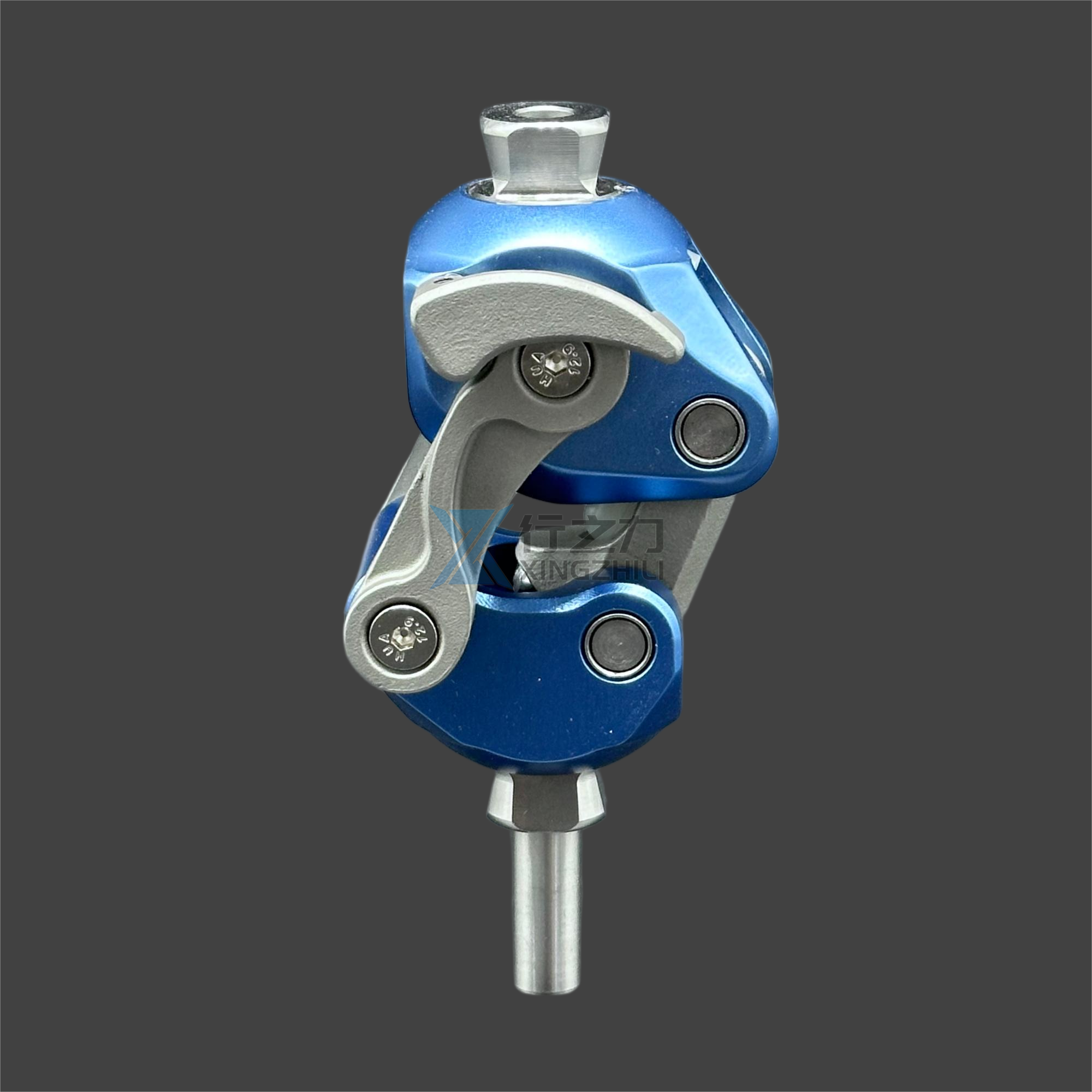
The four-bar knee joint has become one of the most clinically respected prosthetic knee designs available to above-knee and knee-disarticulation amputees. At its core, this mechanism uses a four-link polycentric linkage to replicate the complex rotational behavior of the biological knee, addressing two of the most critical demands in prosthetic rehabilitation: reliable stance-phase stability and a fluid, natural-looking gait. For clinicians, prosthetists, and users evaluating prosthetic options, understanding exactly how the four-bar knee joint achieves both goals simultaneously is essential to making an informed decision.
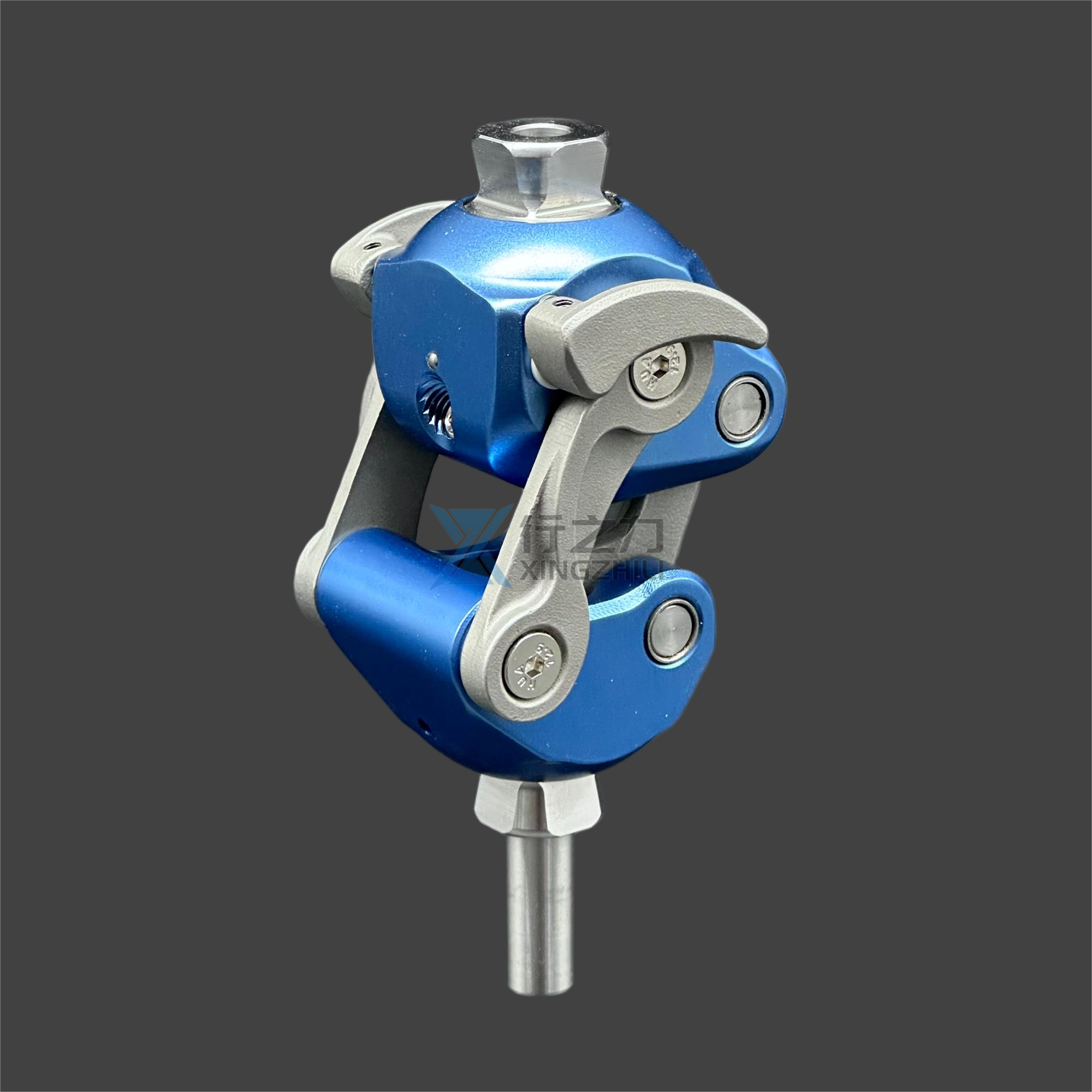
Unlike a single-axis prosthetic knee, which rotates around a fixed pivot, the four-bar knee joint creates a continuously shifting instant center of rotation. This dynamic geometry is the primary reason the four-bar knee joint can offer superior stability during weight-bearing while still allowing a natural, energy-efficient swing phase. The following sections examine the biomechanical principles behind this design, its specific stability contributions, and its documented impact on gait quality.
Biomechanical Design of the Four-Bar Knee Joint
The Four-Link Polycentric Mechanism
The four-bar knee joint derives its name from the four rigid links that form a closed kinematic chain. Two of these links are structural members connecting the proximal socket interface to the distal shank, while the other two form the pivoting cross-links that define the joint's movement path. As the four-bar knee joint flexes and extends, the geometry of these links causes the instantaneous center of rotation to migrate posteriorly and superiorly. This migration is not incidental — it is precisely what gives the four-bar knee joint its mechanical advantage during the stance phase of walking. The design allows the four-bar knee joint to behave more like a biological knee than any fixed-axis alternative, responding dynamically to load rather than passively resisting it.
Instant Center of Rotation and Load Alignment
When a person bearing weight through a four-bar knee joint is in early stance, the instant center of rotation sits posterior to the ground reaction force vector. This configuration places the four-bar knee joint in a geometrically stable position, meaning the joint resists buckling without requiring high muscular effort from the user. For transfemoral amputees who rely entirely on hip musculature to control knee motion, the passive stability provided by the four-bar knee joint geometry significantly reduces the cognitive and physical effort needed to walk safely. This biomechanical principle is one of the core reasons the four-bar knee joint is consistently recommended for users with limited residual limb strength or those returning to active lifestyles.
Stability Advantages of the Four-Bar Knee Joint
Controlled Load-Bearing During Stance
Stability during the stance phase is the primary clinical concern for any prosthetic knee user. The four-bar knee joint addresses this through its self-stabilizing linkage geometry. When the user applies body weight through the prosthesis, the four-bar knee joint tightens geometrically, resisting unintended flexion. This means that on level ground, ramps, or mildly uneven surfaces, the four-bar knee joint provides a reliable base of support without requiring the user to consciously lock or brace the knee. Prosthetists frequently highlight the four-bar knee joint as a confidence-building device because new users experience fewer stumbles and falls during early rehabilitation compared to fixed-axis alternatives.
Resistance to Unexpected Buckling
Buckling — the sudden, uncontrolled collapse of the prosthetic knee — is a significant safety risk for amputees. The four-bar knee joint mitigates this risk through the same shifting instant center mechanism described earlier. Even when external perturbations or momentary alignment errors occur, the four-bar knee joint has an inherent tendency to return to a stable, extended position rather than collapsing. This self-correcting behavior is especially valuable on stairs, curbs, and sloped surfaces where single-axis knees are more vulnerable. Clinical observations consistently show that users fitted with a four-bar knee joint report greater confidence during transitional movements, which in turn supports more active participation in daily life.
Natural Gait and the Four-Bar Knee Joint
Swing Phase Efficiency and Foot Clearance
A natural gait depends not only on stable stance but also on a smooth, efficient swing phase. The four-bar knee joint excels here because its polycentric geometry produces a shorter functional leg length during swing. This automatic shortening reduces the energy needed for toe clearance without requiring the user to adopt compensatory hip-hiking movements. The result is a gait pattern that looks and feels more symmetrical. When comparing walking videos of users with a four-bar knee joint to those with single-axis knees, trained observers and untrained observers alike tend to rate the four-bar knee joint gait as more natural. This perceptual benefit has real social and psychological value for prosthetic users in professional and social environments.
Coordinated Motion Across Varied Terrain
Walking is rarely confined to flat surfaces. The four-bar knee joint adapts well to varied terrain because its linkage geometry passively adjusts the knee's resistance and extension characteristics in response to changing load angles. On downward slopes, the four-bar knee joint allows controlled knee flexion that mimics the eccentric muscle action of a biological knee, preventing the jerky, uncontrolled descent seen with simpler designs. On upward slopes and stairs, the four-bar knee joint provides the necessary extension support while still permitting natural flexion at push-off. This terrain adaptability makes the four-bar knee joint suitable for active users who regularly navigate complex environments rather than primarily flat indoor settings.
FAQ
Who is the best candidate for a four-bar knee joint?
The four-bar knee joint is well suited for transfemoral amputees at K2 to K4 activity levels. Users with limited hip extensor strength benefit most from the passive stability of the four-bar knee joint, while more active users appreciate its gait quality. A certified prosthetist should evaluate residual limb length, strength, and daily activity demands before prescribing a four-bar knee joint.
Does a four-bar knee joint require more maintenance than a single-axis knee?
The four-bar knee joint has more mechanical components than a single-axis design, which means periodic inspection of the linkage pivots and alignment is important. However, modern four-bar knee joint components are engineered for durability and typically require no more maintenance than other quality prosthetic knees when used within recommended activity guidelines. Routine check-ups with a prosthetist ensure the four-bar knee joint remains properly aligned and fully functional.
Can a four-bar knee joint support running or high-impact activities?
Standard passive four-bar knee joint designs are optimized for walking and activities of daily living rather than running or high-impact sport. Some advanced four-bar knee joint models include hydraulic or pneumatic resistance units that extend suitability to more dynamic activities. Users interested in high-impact activities should discuss whether a specialized four-bar knee joint variant or a different prosthetic category better meets their performance goals.