
 EN
EN


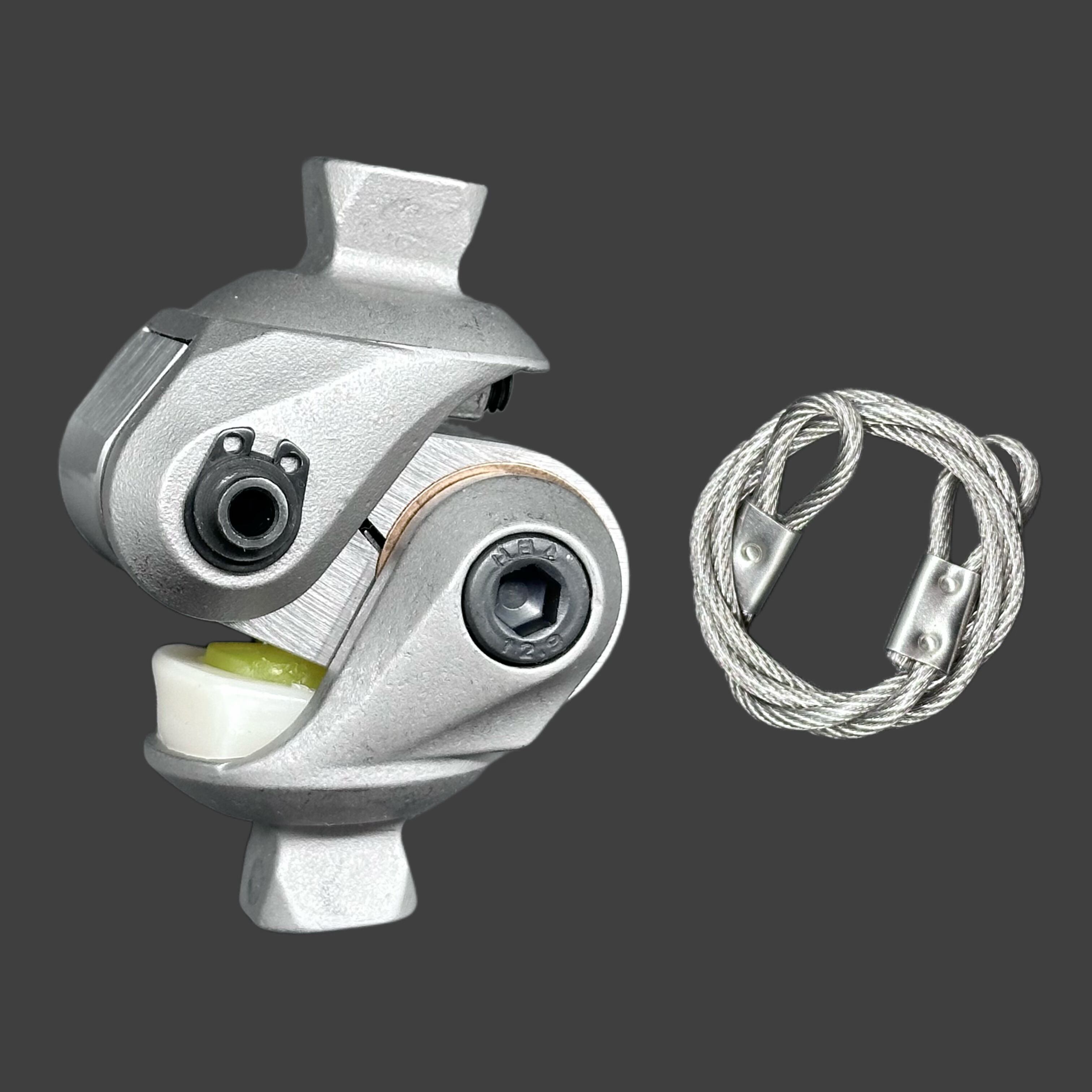
Selecting the right prosthetic knee joint for high-activity users presents a complex decision that directly impacts mobility, safety, and quality of life. For amputees who engage in running, sports, or physically demanding work, the choice between a polycentric knee design and a single-axis knee joint becomes critical. Both systems offer distinct mechanical advantages, but their suitability varies dramatically based on activity level, terrain demands, user weight, and functional expectations. Understanding the biomechanical differences, stability characteristics, and performance profiles of each design enables clinicians and users to make informed decisions that align with specific lifestyle requirements and rehabilitation goals.
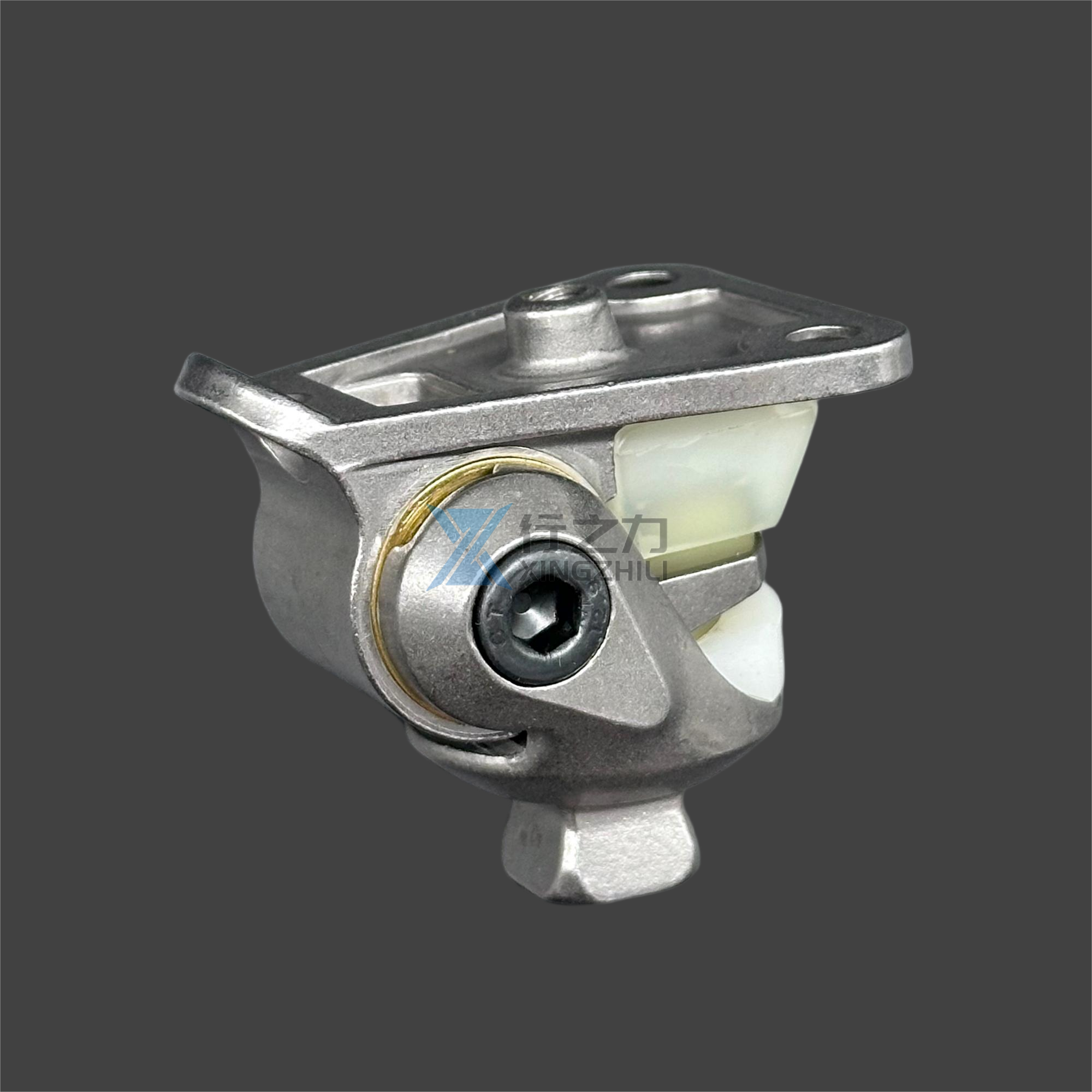
High-activity prosthetic users require knee mechanisms that deliver predictable swing phase control, secure stance stability, and responsive energy return during dynamic movements. The single-axis knee joint operates through a simple hinge mechanism with one fixed center of rotation, offering straightforward mechanical reliability and direct force transmission. Polycentric knee systems, conversely, employ multiple pivot points that create a changing instantaneous center of rotation throughout the gait cycle, resulting in shorter effective leg length during swing and enhanced stability geometry during stance. The decision framework involves analyzing gait mechanics, terrain variability, body mechanics, activity intensity, and the trade-offs between mechanical simplicity and adaptive functionality.
Understanding the Mechanical Foundations of Single-Axis and Polycentric Knee Designs
Core Structural Differences in Rotational Mechanics
The fundamental distinction between these prosthetic knee systems lies in their rotational architecture. A single-axis knee joint functions through a straightforward hinge mechanism where all rotation occurs around one fixed anatomical axis. This creates a consistent radius of rotation throughout the entire range of motion, from full extension through maximum flexion. The mechanical simplicity translates to fewer moving parts, reduced maintenance requirements, and highly predictable performance characteristics. For high-activity users, this predictability becomes valuable during repetitive loading cycles common in running or occupational tasks where consistent mechanical response reduces cognitive demand.
Polycentric knee designs incorporate four-bar linkage systems or multi-axis arrangements that generate a moving instantaneous center of rotation. As the knee flexes, the rotation point shifts posteriorly and superiorly, creating what biomechanists call a migrating axis. This migration produces functional advantages including increased stance stability through geometric changes and reduced effective prosthetic length during swing phase. The complexity introduces additional bearing surfaces and connection points, requiring more sophisticated manufacturing and periodic adjustment. For active users navigating varied terrain, the adaptive geometry can provide enhanced ground clearance and stability transitions that single-axis systems cannot replicate.
Stability Mechanisms During Stance Phase Loading
Stance phase stability represents a critical performance criterion for high-activity prosthetic users who generate substantial loading forces during running, jumping, or rapid directional changes. The single-axis knee joint achieves stability primarily through manual locking mechanisms or friction-based resistance systems that prevent unwanted flexion during weight-bearing. This approach delivers absolute security when properly engaged but requires conscious user control and offers limited adaptability to variable loading conditions. The fixed rotational center means stability depends heavily on alignment relative to the ground reaction force vector, making precise prosthetist adjustment essential for optimal performance.
Polycentric knee mechanisms generate inherent geometric stability through their changing center of rotation. As load increases during stance, the four-bar linkage geometry naturally shifts the instantaneous center posterior to the load line, creating what engineers term geometric lock. This passive stability mechanism activates automatically without user intervention, providing security during unexpected loading situations common in athletic activities. The geometric advantage allows polycentric designs to tolerate greater alignment variations while maintaining stance security. However, this stability comes with increased swing phase resistance in some designs, potentially requiring greater hip flexor effort during rapid gait cycles that characterize running or fast walking.
Energy Transfer Efficiency and Response Characteristics
Energy management during high-activity prosthetic use directly influences endurance, speed potential, and metabolic efficiency. The single-axis knee joint provides direct mechanical coupling between proximal and distal components with minimal energy dissipation through the hinge mechanism. This efficient force transmission proves advantageous during activities requiring rapid energy transfer, such as sprinting or plyometric movements. The simple bearing interface generates minimal friction losses when properly maintained, allowing muscular effort to translate directly into limb movement. For competitive athletes or occupational users performing repetitive high-intensity tasks, this efficiency advantage accumulates significantly over extended activity periods.
Polycentric systems distribute forces across multiple bearing points and linkage connections, introducing additional interfaces where energy dissipation can occur. The mechanical advantage gained through changing lever arms can partially offset these losses, but the net energy efficiency typically remains slightly lower than comparable single-axis designs. However, polycentric knees often incorporate more sophisticated extension assist mechanisms and hydraulic dampening systems that can enhance energy return during specific gait phases. For high-activity users, the trade-off involves balancing pure mechanical efficiency against functional advantages like improved swing clearance and adaptive stability that reduce compensatory energy expenditure at the hip and trunk.
Activity-Specific Performance Considerations for High-Demand Users
Running and Sprint Performance Characteristics
Running mechanics place extreme demands on prosthetic knee systems through repetitive high-impact loading, rapid flexion-extension cycles, and requirements for consistent energy return. The single-axis knee joint excels in running applications through its predictable swing phase timing and minimal mechanical resistance during rapid cycling. The fixed rotation point allows runners to develop consistent muscle activation patterns and proprioceptive feedback, essential for developing efficient running economy. Elite running prostheses often utilize single-axis designs with specialized dampening systems that absorb impact forces while maintaining direct energy transmission during push-off phases.
Polycentric knee designs typically introduce swing phase resistance that can impede rapid leg recovery during running cycles. The multiple bearing surfaces and changing mechanical advantage throughout flexion create variable resistance profiles that require adaptive motor control. However, some high-activity users find the enhanced stance stability of polycentric systems valuable when transitioning between running and walking or navigating uneven terrain during trail activities. The geometric stability reduces buckling risk during unexpected ground contact variations, providing security that outweighs the swing phase efficiency penalty for users prioritizing safety over maximum speed. Competitive runners generally favor single-axis designs, while recreational athletes on varied terrain may find polycentric advantages compelling.
Terrain Adaptability and Stability on Irregular Surfaces
High-activity prosthetic users frequently encounter terrain challenges including slopes, uneven ground, loose surfaces, and obstacles requiring adaptive stability responses. The single-axis knee joint provides consistent mechanical behavior across terrain types but relies heavily on proper alignment and user technique to maintain stability. On slopes and uneven ground, the fixed rotational center means ground reaction force vectors can more easily shift anterior to the knee axis, creating flexion moments that challenge stance security. Users must develop compensatory strategies including increased quadriceps tension through the prosthetic socket or altered weight distribution patterns to maintain control.
Polycentric knee systems demonstrate superior adaptability to terrain variations through their geometric stability mechanisms. The migrating center of rotation automatically adjusts relative to changing ground reaction forces, providing passive stabilization as terrain angle varies. This characteristic proves especially valuable for outdoor recreational activities including hiking, where continuous terrain changes would otherwise demand constant conscious compensation. The enhanced stability allows users to navigate slopes with greater confidence and reduced cognitive load. Additionally, the shorter effective prosthetic length during swing phase reduces toe-catching risk on irregular surfaces, improving safety during rapid direction changes or obstacle navigation common in field sports and outdoor work environments.
Impact Absorption and Joint Protection During High-Force Activities
Repetitive high-impact loading from jumping, running, or occupational tasks generates substantial forces that prosthetic knee systems must absorb and transmit without component failure or user discomfort. The single-axis knee joint typically incorporates extension bumpers and friction mechanisms to manage impact forces, but the direct mechanical coupling means forces transmit relatively unmodified through the system. This characteristic demands robust component design and proper socket fit to prevent residual limb trauma during high-force activities. The mechanical simplicity allows integration of specialized dampening systems specifically tuned for impact activities, but these additions increase complexity and maintenance requirements.
Polycentric knee designs inherently distribute impact forces across multiple bearing points and linkage connections, providing some mechanical cushioning through the system architecture itself. The changing mechanical advantage during flexion can modulate force transmission, potentially reducing peak loads experienced by the residual limb. However, the increased component count creates more potential failure points under extreme loading conditions. For high-activity users engaging in impact sports or physically demanding occupations, component durability becomes paramount. Some polycentric systems incorporate hydraulic or pneumatic dampening elements that provide superior impact absorption compared to friction-based single-axis alternatives, but at the cost of added weight and complexity that may compromise other performance parameters.
User-Specific Selection Criteria and Individual Suitability Factors
Residual Limb Length and Prosthetic Component Space Requirements
Anatomical dimensions significantly influence prosthetic knee selection, particularly for transfemoral amputees with varying residual limb lengths. The single-axis knee joint generally requires less vertical build height compared to polycentric systems, making it advantageous for users with longer residual limbs where component space becomes limited. The compact hinge design allows for better cosmetic appearance and reduced overall prosthetic mass positioned distally. For high-activity users, minimizing distal weight reduces swing phase energy requirements and enables faster limb acceleration, translating directly to improved performance in running and jumping activities.
Polycentric knee mechanisms require additional vertical space to accommodate the four-bar linkage or multi-axis arrangement. This increased build height can create challenges for bilateral amputees or those with minimal amputation who need to match contralateral leg length precisely. However, the same polycentric design that requires more space when extended produces the shortest effective length during swing phase, potentially creating net ground clearance advantages. For users with short residual limbs, polycentric systems may actually prove more suitable by maximizing stance stability through geometric advantages that compensate for reduced proprioceptive feedback and muscular control. The space trade-off must be evaluated individually based on specific anatomical measurements and activity priorities.
Muscular Strength and Proprioceptive Control Capacity
The neuromuscular demands of controlling different prosthetic knee systems vary substantially, influencing selection for high-activity users with different strength and control capacities. Single-axis knee joint designs require strong hip extensor and flexor control to manage stance stability and swing initiation. Users must generate sufficient hip extension torque to maintain knee extension during stance and adequate hip flexion power to initiate swing against knee friction mechanisms. This demand proves manageable for athletic individuals with excellent residual limb musculature but may challenge users with compromised strength or those attempting to maximize performance in endurance activities where muscular efficiency becomes critical.
Polycentric knee systems reduce stance phase muscular demands through geometric stability mechanisms that provide passive support without requiring continuous hip extensor activation. This characteristic benefits users who need to conserve energy during extended activity periods or those with compromised proximal musculature. However, some polycentric designs require greater hip flexor effort during swing initiation to overcome the mechanical advantage that provides stance stability. The optimal choice depends on individual strength profiles and activity patterns. Sprinters and power athletes typically possess the muscular capacity to exploit single-axis efficiency, while endurance athletes and recreational users may prefer the reduced stance phase demands of polycentric geometry that allows muscular effort conservation across longer activity durations.
Weight Considerations and Dynamic Loading Profiles
User body weight and the dynamic loading profiles generated during high-activity pursuits directly influence prosthetic knee durability and performance characteristics. Single-axis knee joint systems typically offer higher weight ratings within compact form factors due to their simple mechanical structure that concentrates forces through robust bearing assemblies. This makes them suitable for heavier users or those generating extreme loading forces during activities like powerlifting, heavy construction work, or contact sports. The direct load path through the hinge mechanism allows predictable engineering analysis and component sizing, enabling manufacturers to specify precise weight limits with confidence.
Polycentric knee designs distribute loads across multiple pivot points and connecting links, creating complex stress patterns that require careful engineering to prevent premature wear or catastrophic failure. While this load distribution can enhance durability under normal conditions, extreme dynamic loads during high-impact activities may stress multiple components simultaneously. Heavier users engaging in vigorous activity should verify that polycentric systems meet not just static weight ratings but dynamic impact specifications appropriate for their intended activities. Some manufacturers offer reinforced polycentric designs specifically engineered for high-activity users, incorporating advanced materials and bearing technologies that maintain the geometric advantages while supporting demanding loading profiles.
Practical Decision Framework for Clinicians and Users
Assessment Protocol for Activity-Matched Knee Selection
Establishing a systematic evaluation process ensures prosthetic knee selection aligns with actual user capabilities and activity demands rather than assumptions or preferences. The assessment begins with detailed activity profiling that documents specific movements, terrain conditions, duration patterns, and performance expectations. High-activity users should maintain activity logs quantifying time spent in different activity categories, including walking speeds, running distances, terrain types, and occupational demands. This objective data reveals actual usage patterns that may differ significantly from initial expectations, preventing selection errors based on aspirational rather than realistic activity profiles.
Physical assessment evaluates residual limb characteristics, joint range of motion, muscular strength, cardiovascular capacity, and proprioceptive control. Clinicians should perform standardized strength testing of hip flexors, extensors, and abductors to determine whether users possess the muscular capacity to control single-axis designs effectively or would benefit from polycentric geometric stability. Gait analysis using force plates and motion capture systems provides objective data about ground reaction force vectors, knee moment patterns, and compensatory strategies that indicate whether current or proposed prosthetic systems match user capabilities. For high-activity candidates, functional testing should include relevant activities performed at realistic intensities rather than relying solely on standard clinical gait assessments.
Trial Period Evaluation and Performance Monitoring
Optimal prosthetic knee selection often requires comparative trial periods where users experience both single-axis and polycentric systems during actual high-activity pursuits. Trial evaluations should extend beyond initial fitting to include adaptation periods of several weeks, as neuromuscular learning significantly influences perceived performance and comfort. Users should perform their typical high-activity routines with each system while documenting subjective experiences including perceived stability, energy expenditure, confidence levels, and specific functional challenges. Objective measures including activity monitoring through accelerometers, heart rate response, and video gait analysis provide quantifiable performance data complementing subjective feedback.
Performance monitoring during trials should specifically examine the biomechanical trade-offs inherent to each design. With single-axis knee joint systems, evaluation focuses on stance stability adequacy, swing phase efficiency, and user confidence during rapid movements or variable terrain. Polycentric system trials emphasize stance security benefits, swing clearance improvements, and whether enhanced stability justifies any swing phase efficiency penalties. Users should test each system in their most demanding activities rather than limiting evaluation to controlled environments. Trail running, competitive sports participation, or occupational task simulation reveals performance characteristics invisible during clinical assessment, enabling evidence-based selection decisions.
Long-Term Maintenance and Performance Sustainability
High-activity prosthetic use accelerates component wear and creates maintenance demands that influence long-term satisfaction and total ownership costs. Single-axis knee joint designs typically require periodic bearing inspection, bushing replacement, and friction mechanism adjustment, but their mechanical simplicity makes maintenance straightforward and component replacement relatively inexpensive. Users living in remote areas or those traveling frequently for athletic competition may prefer the reliability and field-maintainability of single-axis systems. The reduced component count minimizes catastrophic failure risk during critical activities, though it does not eliminate the need for systematic preventive maintenance.
Polycentric knee systems demand more complex maintenance protocols due to multiple bearing surfaces, linkage connections, and potentially integrated hydraulic or pneumatic systems. High-activity use generates accelerated wear patterns across these multiple interfaces, requiring more frequent professional inspection and adjustment. However, modern polycentric designs increasingly incorporate sealed bearing assemblies and advanced materials that extend service intervals despite mechanical complexity. Users should consider proximity to qualified prosthetists, availability of replacement components, and manufacturer support infrastructure when selecting polycentric systems for high-activity applications. Total cost of ownership over typical component lifespan often exceeds initial purchase price differences, making long-term maintenance requirements a significant decision factor.
Integration with Complete Prosthetic System Architecture
Coordination with Foot-Ankle Components and Energy Return Systems
Prosthetic knee performance depends critically on integration with distal components, particularly foot-ankle systems that determine energy storage and return characteristics. Single-axis knee joint designs pair effectively with high-performance running feet that maximize energy return through carbon fiber composites specifically tuned for athletic activities. The direct mechanical coupling and minimal resistance of single-axis knees allow full exploitation of foot energy return without knee-level dissipation. This system approach proves optimal for competitive runners and athletes prioritizing maximum speed and efficiency where component integration creates multiplicative rather than additive performance benefits.
Polycentric knee systems may require careful foot selection to balance the swing phase resistance inherent to multi-axis designs. Lighter-weight feet with aggressive energy return may partially compensate for polycentric swing resistance, though this combination requires careful tuning to prevent excessive heel rise or delayed knee flexion initiation. Alternatively, pairing polycentric knees with more stable, controlled-release foot designs creates systems optimized for variable terrain and stability-prioritized activities rather than pure speed. The foot-knee combination should be evaluated as an integrated system rather than selecting components independently, as interaction effects significantly influence overall performance for high-activity users.
Socket Interface Optimization and Force Distribution
The prosthetic socket interface between residual limb and mechanical components fundamentally determines comfort, control, and performance potential regardless of knee selection. Single-axis knee joint systems generate relatively predictable force patterns that allow socket design optimization for specific loading conditions. The fixed rotational center creates consistent moment arms that socket designers can account for through targeted pressure relief and loading zones. High-activity users require sockets that maintain intimate fit during dynamic movements while accommodating volume fluctuations from activity-induced swelling or atrophy, demanding advanced suspension systems and potentially vacuum-assisted technologies.
Polycentric knee systems alter force distribution patterns compared to single-axis designs due to their changing instantaneous centers and geometric stability mechanisms. The migrating rotation point creates dynamic loading patterns that socket interfaces must accommodate without creating pressure concentrations or compromising suspension security. Some prosthetists report that polycentric geometric stability reduces overall socket loading magnitudes during stance, potentially improving comfort for high-activity users. However, this benefit depends on proper alignment and tuning of the four-bar linkage geometry. Socket design must account for the specific polycentric mechanism employed, as different manufacturers' systems generate distinct loading profiles requiring individualized interface optimization.
Alignment Principles and Setup Requirements
Prosthetic alignment critically determines whether single-axis or polycentric knee systems deliver their theoretical performance advantages in practice. Single-axis knee joint alignment focuses on positioning the fixed rotational axis appropriately relative to the ground reaction force vector during stance and the center of gravity during swing. Anterior displacement of the axis enhances swing initiation but compromises stance stability, while posterior positioning increases stability at the cost of swing resistance. High-activity users require precise alignment that balances these competing demands based on specific activity priorities, often necessitating multiple adjustment sessions with performance testing under realistic loading conditions.
Polycentric knee alignment involves additional complexity due to the changing instantaneous center and the geometric relationships between multiple linkage pivot points. Prosthetists must consider how the four-bar mechanism geometry interacts with overall limb alignment to achieve desired stability characteristics without excessive swing resistance. Some polycentric systems offer adjustable linkage geometries that allow tuning of stability versus resistance trade-offs post-delivery, providing optimization capability as users develop skill or change activity patterns. High-activity applications demand particularly careful alignment because performance deficits from suboptimal setup compound dramatically during extended or intensive use, creating efficiency penalties and potential injury risk that inactive users might never encounter.
FAQ
What are the primary advantages of single-axis knee joints for high-activity prosthetic users?
Single-axis knee joints offer several key advantages for high-activity users, including superior swing phase efficiency due to their simple hinge mechanism with minimal resistance, predictable mechanical behavior that allows consistent motor pattern development, lighter weight from fewer components reducing swing energy requirements, more compact build height suitable for longer residual limbs, easier maintenance with fewer wear points, and direct energy transmission that maximizes speed potential during running or athletic activities. These characteristics make single-axis designs particularly suitable for competitive athletes, sprinters, and users prioritizing maximum performance over adaptive stability features.
When should high-activity users consider polycentric knee systems instead of single-axis designs?
Polycentric knee systems become preferable for high-activity users in several scenarios: when terrain variability demands adaptive stability beyond what alignment and technique can provide, when shorter residual limbs require enhanced geometric stability to compensate for reduced proprioceptive control, when activities involve frequent transitions between stance and swing requiring automatic stability mechanisms, when ground clearance during swing phase presents challenges due to prosthetic length constraints, or when users prioritize security and confidence over maximum speed efficiency. Recreational athletes navigating outdoor terrain, occupational users working on irregular surfaces, and individuals with compromised proximal strength often benefit more from polycentric geometric advantages despite swing phase efficiency trade-offs.
Can prosthetic knee selection be changed after initial fitting if activity levels increase?
Yes, prosthetic knee systems can and should be reassessed as user activity levels evolve. Many amputees initially receive less complex systems during rehabilitation, then transition to higher-performance components as strength, skill, and activity demands increase. This progression often involves moving from basic single-axis designs to specialized high-activity single-axis systems with advanced dampening, or from single-axis to polycentric when terrain demands increase. Insurance coverage for component upgrades varies by policy and requires documentation demonstrating functional necessity and changed circumstances. Users should maintain activity logs and work with prosthetists to objectively document performance limitations with current systems, establishing medical justification for advanced components matched to actual activity profiles rather than aspirational goals.
How do weather conditions and environmental factors affect the choice between single-axis and polycentric knee systems?
Environmental conditions significantly influence prosthetic knee performance and selection priorities. Single-axis knee joint systems with sealed bearing assemblies generally demonstrate better resistance to water, mud, sand, and temperature extremes due to their simpler mechanical architecture with fewer ingress points. This makes them preferable for users engaging in water sports, beach activities, or work in harsh environments. Polycentric systems with multiple pivot points and linkages create more opportunities for contamination that can increase friction or cause binding, though modern designs increasingly incorporate environmental sealing. Temperature extremes affect hydraulic fluid viscosity in dampening systems found in both designs, potentially altering resistance characteristics. Users in variable climates or those participating in outdoor activities across seasons should discuss environmental durability with prosthetists and consider maintenance protocols specific to their exposure conditions.
Table of Contents
- Understanding the Mechanical Foundations of Single-Axis and Polycentric Knee Designs
- Activity-Specific Performance Considerations for High-Demand Users
- User-Specific Selection Criteria and Individual Suitability Factors
- Practical Decision Framework for Clinicians and Users
- Integration with Complete Prosthetic System Architecture
-
FAQ
- What are the primary advantages of single-axis knee joints for high-activity prosthetic users?
- When should high-activity users consider polycentric knee systems instead of single-axis designs?
- Can prosthetic knee selection be changed after initial fitting if activity levels increase?
- How do weather conditions and environmental factors affect the choice between single-axis and polycentric knee systems?